
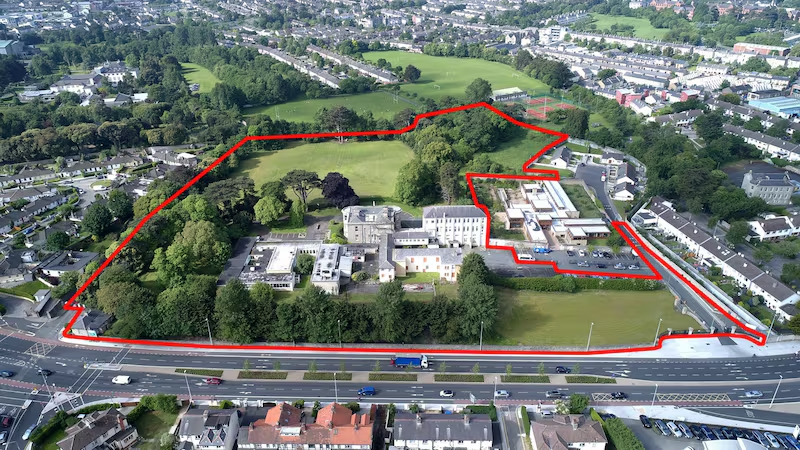
As we look towards 2026, the South Dublin property market, with Blackrock at its heart, is poised for a transformation influenced by high-stakes investment and demographic shifts. The interplay between global economic policy, localised demand for premium living, and the unpredictable wildcard of large-scale entertainment development creates a uniquely complex landscape. For anyone involved in dublin real estate or irish property investment, understanding these converging forces is paramount to navigating the opportunities and challenges that lie ahead in the next two years.
The Macro Backdrop: Irish Economy & Interest Rates in 2026
The performance of premium property markets like South Dublin is inextricably linked to the broader financial climate. For 2026, the outlook hinges on two pivotal factors: the trajectory of European Central Bank (ECB) interest rates and the resilience of domestic growth, both of which directly dictate mortgage affordability and buyer confidence.
ECB Policy & Mortgage Rate Expectations
After a prolonged period of monetary tightening, the consensus points towards a stabilisation, if not a gradual easing, of ECB rates by 2026. However, the era of ultra-low rates is over. Buyers in postcodes like Blackrock, Dalkey, and Sandymount should anticipate mortgage rates settling at a ‘new normal’—higher than the 2021 lows but manageable for those with significant equity or high disposable income. The Central Bank of Ireland‘s mortgage lending rules will continue to act as a governor on excessive borrowing, ensuring demand is underpinned by substantial deposits, particularly at the upper tiers of the market.
Irish GDP Growth & Employment’s Role in Demand
Sustained demand in South Dublin requires a robust employment market, particularly in the multinational and professional services sectors. Forecasts for moderate but stable Irish GDP growth in 2025-2026 suggest continued strong employment in these high-value industries. This fuels the relocation budgets of executives and the bonus pools of professionals, which in turn flow directly into the premium residential markets of Dun Laoghaire-Rathdown, supporting price resilience even in a higher-rate environment.
Blackrock’s Micro-Market: Prime Suburb Under Pressure
Zooming in from the macro picture, Blackrock presents a micro-market under specific, intense pressures. Its enduring appeal creates a competitive dynamic where only the most desirable properties command top euro, and buyer criteria have become increasingly sophisticated.
The ‘Period Premium’ vs. BER A3+ Demand
A clear bifurcation is emerging in Blackrock’s housing stock. On one side, meticulously maintained period homes with original features continue to fetch a significant ‘period premium’. On the other, a new, powerful demand driver has emerged: the modernised or new-build home with a superior BER (Building Energy Rating) A3 standard or better. The rising cost of energy and a growing environmental consciousness mean that a BER A3 rating is no longer a nice-to-have but a critical value determinant, often rivalling the allure of period charm for a growing segment of buyers.
Family Footprint: Schools & Transport Links
The family buyer remains the cornerstone of Blackrock’s market. The presence of elite educational institutions, most notably Blackrock College (and its feeder schools), creates an almost insatiable demand for homes within catchment areas. This is compounded by excellent transport links:
- The DART providing a swift commute to Dublin’s commercial centres.
- The proximity to the M50 facilitating access to business parks and the airport.
- Walkable villages with premium retail and dining options.
This trifecta of schools, transport, and amenities insulates Blackrock from broader market volatility more effectively than almost any other suburb.
The Casino Development Wildcard for South Dublin
No forecast for South Dublin is complete without addressing the perennial dublin casino debate. The potential awarding of a sole irish casino license and the development of a large-scale integrated resort remains a potent wildcard that could reshape commercial and residential dynamics in its immediate vicinity.
License Applications & Potential Southside Locations
Past applications have consistently highlighted southside locations, including docklands and former industrial sites in Dun Laoghaire-Rathdown, due to transport infrastructure and tourism appeal. The role of NAMA (National Asset Management Agency) in assembling and disposing of large strategic land banks in the past cannot be ignored, as such parcels often become the focus for transformative projects. A successful application in South Dublin would trigger massive commercial investment in hospitality, retail, and entertainment, creating a new employment hub.
Commercial Spillover vs. Residential Sentiment
The impact on residential property would be dual-faceted. Proximity to such a development would likely boost rental yields and values for city-centre and high-density apartment investments, appealing to a workforce in the hospitality and service sectors. However, for the prime, family-oriented suburbs like Blackrock and nearby areas, sentiment is more complex. While some may anticipate a general uplift in commercial activity, core residential demand may be tempered by concerns over increased traffic and a perceived change in community character, highlighting a potential divergence between commercial and prime residential market responses.
Investment Hotspots Beyond Blackrock: Dun Laoghaire-Rathdown
While Blackrock sets the benchmark, the ripple effects of its demand are felt keenly along the coastal corridor and in adjacent villages, creating compelling opportunities for buyers and investors willing to look at the wider Dun Laoghaire-Rathdown County Council area.
The Coastal Corridor Appeal
Areas like Monkstown, Sandycove, and Dalkey offer a similar, if not enhanced, maritime lifestyle. The DART line is the golden thread connecting these premium nodes. Properties with sea views, direct coastal access, or in the vibrant centres of these villages continue to see demand outstrip supply. This corridor benefits from the same macroeconomic drivers as Blackrock but often with an even greater scarcity value, especially for unique period homes or modern architectural statements on prime sites.
The Rise of Luxury Downsizing
A defining trend set to accelerate into 2026 is luxury downsizing. Empty-nesters from larger Blackrock and Dalkey family homes are not simply trading down; they are ‘right-sizing’ into high-specification, low-maintenance apartments or smaller homes with premium finishes and services. This is fuelling demand for developments offering:
- Concierge services and enhanced security.
- Private gardens or expansive balconies.
- Energy efficiency and modern design (BER A2 or better).
- Walkable proximity to village centres and the DART.
This demographic is cash-rich and highly discerning, creating a specific and growing sub-market within South Dublin’s property ecosystem.
Our 2026 Predictions for Buyers & Investors
Based on the converging trends of economic policy, local demand, and speculative development, here are our concrete predictions and strategic advice for navigating the 2026 market.
Strategic Buys for Owner-Occupiers
For families and owner-occupiers, location and specification will be non-negotiable. The best-performing assets will be:
- Homes within the definitive catchment of top schools like Blackrock College.
- Properties, whether period or modern, that achieve a BER A3 or superior rating through renovation or design.
- Homes on quiet, established roads within a 10-minute walk of a DART station or a village centre.
Compromising on location for size will prove to be a false economy in this market cycle.
Portfolio Considerations for Investors
For investors, the strategy must be nuanced. Prime South Dublin residential will remain a stable, high-entry-cost asset class with moderate but secure yields, insulated from the sharp corrections possible in more speculative markets. However, investors should monitor the dublin casino debate closely. A license award could create immediate opportunities in:
- Commercial property and site acquisition in potential target zones.
- The private rented sector for associated workforce housing in specific nodes.
- Luxury downsizing developments, which cater to a demographic less sensitive to interest rate fluctuations.
Diversification within the South Dublin region—balancing core residential holdings with targeted commercial or development land exposure—will be the prudent approach.
Ultimately, we believe Blackrock and South Dublin’s intrinsic strengths will ensure resilience, making informed, location-specific decisions more critical than ever in 2026.